A major feature of our lab is the development of new technologies to visualize and manipulate the 3D genome. We co-developed Oligopaint FISH probes, which allow researchers to design highly specific DNA and RNA probes for imaging genomic loci with unprecedented flexibility. These tools have been widely adopted by the field and serve as the foundation for many of our subsequent innovations. If you are interested in working with us to generate custom Oligopaint FISH probes for your lab click Here
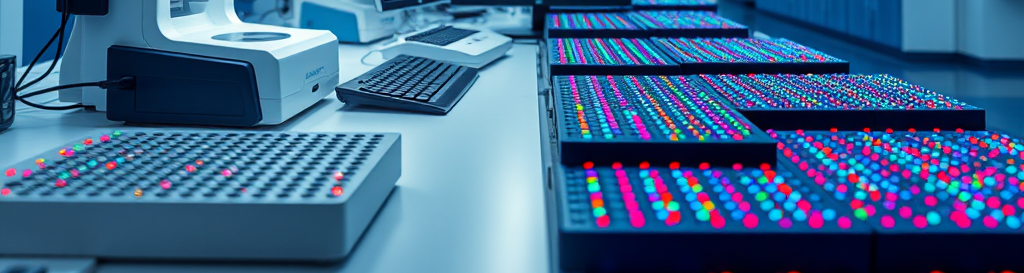
Building on Oligopaints, we recently developed HiDRO (High-throughput DNA or RNA Oligopaint FISH), the first fully automated pipeline capable of imaging thousands of samples in parallel. HiDRO enables us to measure the structure and/or positioning of chromatin relative to nuclear landmarks at scale, providing a platform for unbiased, genome-wide discovery of nuclear architecture regulators. We have been combining HiDRO with functional genomics screening, using RNAi and drug-based perturbations to systematically identify factors required for 3D genome organization. This approach has already revealed hundreds of previously unknown regulators of TADs, LADs, and chromatin loops — including RNA-binding proteins, kinases, and chromatin remodelers — and continues to generate new biological hypotheses. In parallel, we are expanding the resolution and versatility of imaging technologies through sequential FISH, expansion microscopy, and super-resolution imaging, enabling detailed maps of chromosome folding at the single-cell level. By making these methods broadly accessible, we not only drive our own discoveries but also provide the community with powerful new approaches for exploring genome function.
 The Joyce Lab at UPENN